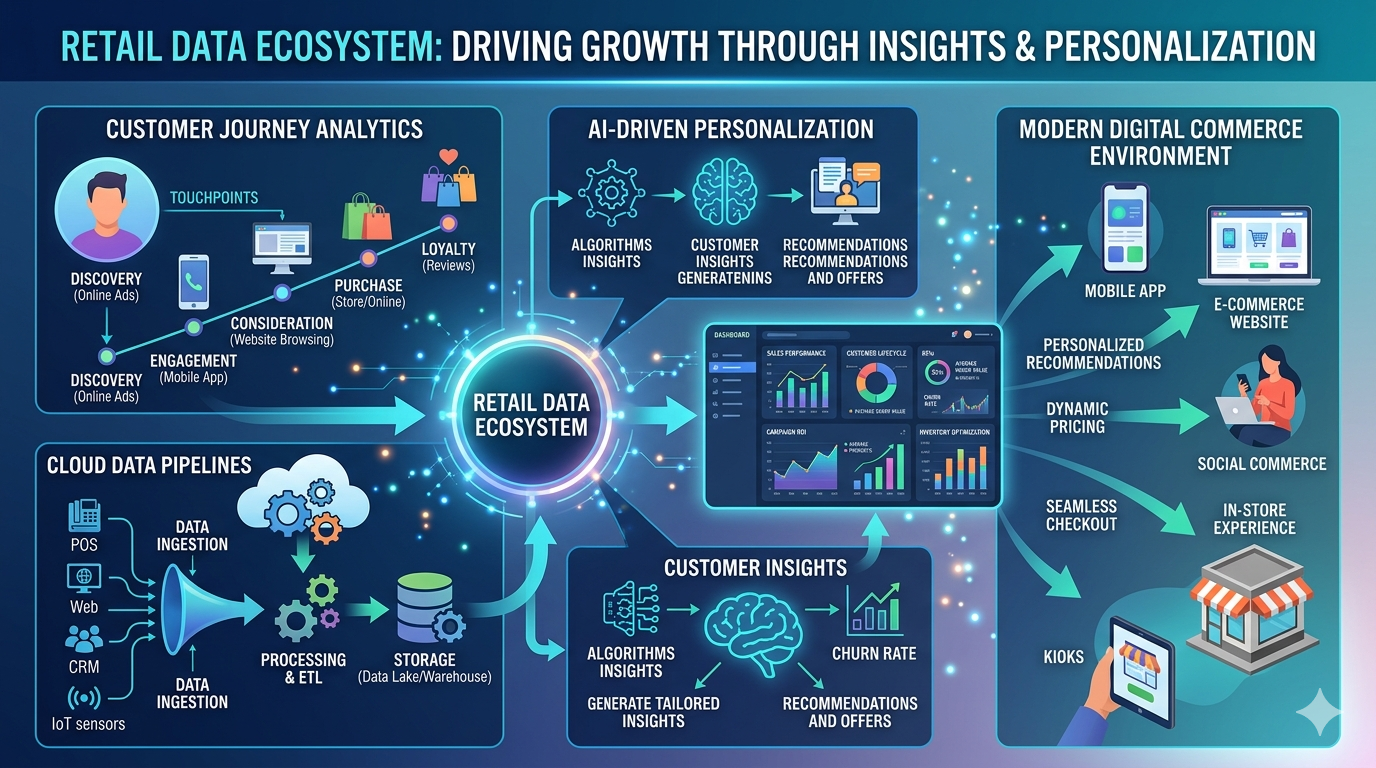
In today’s highly competitive retail and e-commerce landscape, delivering exceptional shopper experiences has become a key differentiator for businesses. Customers expect personalized interactions, seamless journeys, and real-time responses across all touchpoints. To meet these expectations, organizations must build a strong data estate that enables them to collect, manage, and analyze customer data effectively.
A data estate refers to the entire ecosystem of data assets within an organization, including data sources, storage systems, analytics tools, and governance frameworks. When properly designed, a strong data estate empowers businesses to gain deeper insights into shopper behavior and deliver highly personalized experiences.
🚀 Why a Strong Data Estate is Essential for Shopper Experience
Modern shoppers interact with brands across multiple channels, including websites, mobile apps, social media, and physical stores. Each interaction generates valuable data that can be used to understand customer preferences and behavior. However, without a unified data estate, this data often remains fragmented and underutilized.
A strong data estate enables organizations to:
- Consolidate data from multiple sources into a unified platform
- Gain a 360-degree view of customer behavior
- Deliver personalized recommendations and offers
- Improve decision-making through real-time insights
By centralizing data, businesses can eliminate silos and ensure that all teams have access to accurate and consistent information.
Another important benefit is real-time analytics. A well-designed data estate allows organizations to process data as it is generated, enabling them to respond quickly to customer actions. For example, businesses can recommend products based on browsing history or send targeted offers at the right moment.
💡 Key Components of a Strong Data Estate
Building a strong data estate requires careful planning and the right combination of technologies and processes. Organizations must focus on several key components to ensure success.
Important components include:
- Data Integration: Connecting data from various sources such as CRM systems, e-commerce platforms, and social media
- Data Storage: Using scalable storage solutions like data lakes and warehouses
- Data Governance: Ensuring data quality, security, and compliance
- Analytics Tools: Leveraging AI and machine learning to generate insights
These components work together to create a robust data infrastructure that supports advanced analytics and personalization.
Another critical aspect is data quality. Poor-quality data can lead to inaccurate insights and ineffective strategies. Organizations must implement data validation and cleansing processes to maintain high-quality data.
🔍 Personalization and Customer Engagement
One of the primary goals of a strong data estate is to enable personalization. By analyzing customer data, businesses can create tailored experiences that resonate with individual shoppers.
Examples of personalization include:
- Product recommendations based on browsing history
- Personalized email campaigns
- Dynamic website content
- Targeted promotions
Personalization not only improves customer satisfaction but also increases conversion rates and loyalty.
⚙️ Challenges and Best Practices
While building a data estate offers significant benefits, it also comes with challenges. Organizations may face issues such as data silos, integration complexity, and privacy concerns.
To overcome these challenges, businesses should:
- Invest in modern data platforms
- Implement strong data governance policies
- Ensure compliance with data protection regulations
- Foster collaboration between teams
✅ Conclusion
Optimizing shopper experiences requires more than just marketing strategies—it requires a strong data foundation. A well-designed data estate enables businesses to understand their customers, deliver personalized experiences, and make data-driven decisions. Organizations that invest in building and maintaining a strong data estate are better positioned to succeed in today’s competitive market.
